
Fall Appliance Maintenance Checklist for Northern Colorado
Fall is the right time to get your appliances ready for what's ahead. You've got heavy cooking season starting in October and running straight through the holidays. You've got blankets and winter coats going through the washer and dryer. You've got temperatures in Fort Collins that can drop below freezing overnight before Thanksgiving. If something is going to fail under that kind of demand, now is when you want to find it. Not the night before you're cooking for twelve people.
Here's a practical checklist to work through before the cold sets in.
Oven and Range
The oven is about to get used more than it has since last winter. Before you're in the middle of a holiday meal, check a few things.
Give it a deep clean. Run the self-clean cycle if your oven has one, or do it manually. Either way, a buildup of grease and residue on the oven floor and door affects cooking performance and creates smoke. The door gasket, which is the rubber seal around the inside edge of the door, deserves specific attention. A gasket that's pulling away from the door or has cracks lets heat escape and throws off cooking times. Replace it if it's damaged.
Test your oven temperature. Get an inexpensive oven thermometer, set the oven to 350 degrees, and check the reading after 20 minutes of preheating. If the actual temperature is consistently off by more than 25 degrees, the temperature sensor may need recalibration or replacement. This is a common reason why baked goods come out inconsistent and cooks assume they did something wrong.
For gas ranges, test each burner igniter. They should click once or twice and light cleanly. If a burner clicks repeatedly before lighting, the igniter is dirty or getting weak. Remove the burner cap and clean around the igniter with a dry toothbrush. If the clicking continues after the burner is already lit, the igniter is failing and should be replaced before it stops working entirely during a busy cooking stretch.
Dryer and Dryer Vent
The dryer vent should be cleaned before winter. This is not optional maintenance. It's a fire safety issue.
Fall means heavier loads. Blankets, comforters, thick sweatshirts, and coats all take longer to dry and push more lint through the vent system. Combined with a duct that's been accumulating lint all year, this is when fires happen.
If you haven't had the vent professionally cleaned in the past year, schedule it now. If you're handy and have a short straight run, you can do it yourself with a brush kit from the hardware store. But longer ducts or runs with bends and turns need proper equipment to clean thoroughly. A partially cleaned duct doesn't fix the problem.
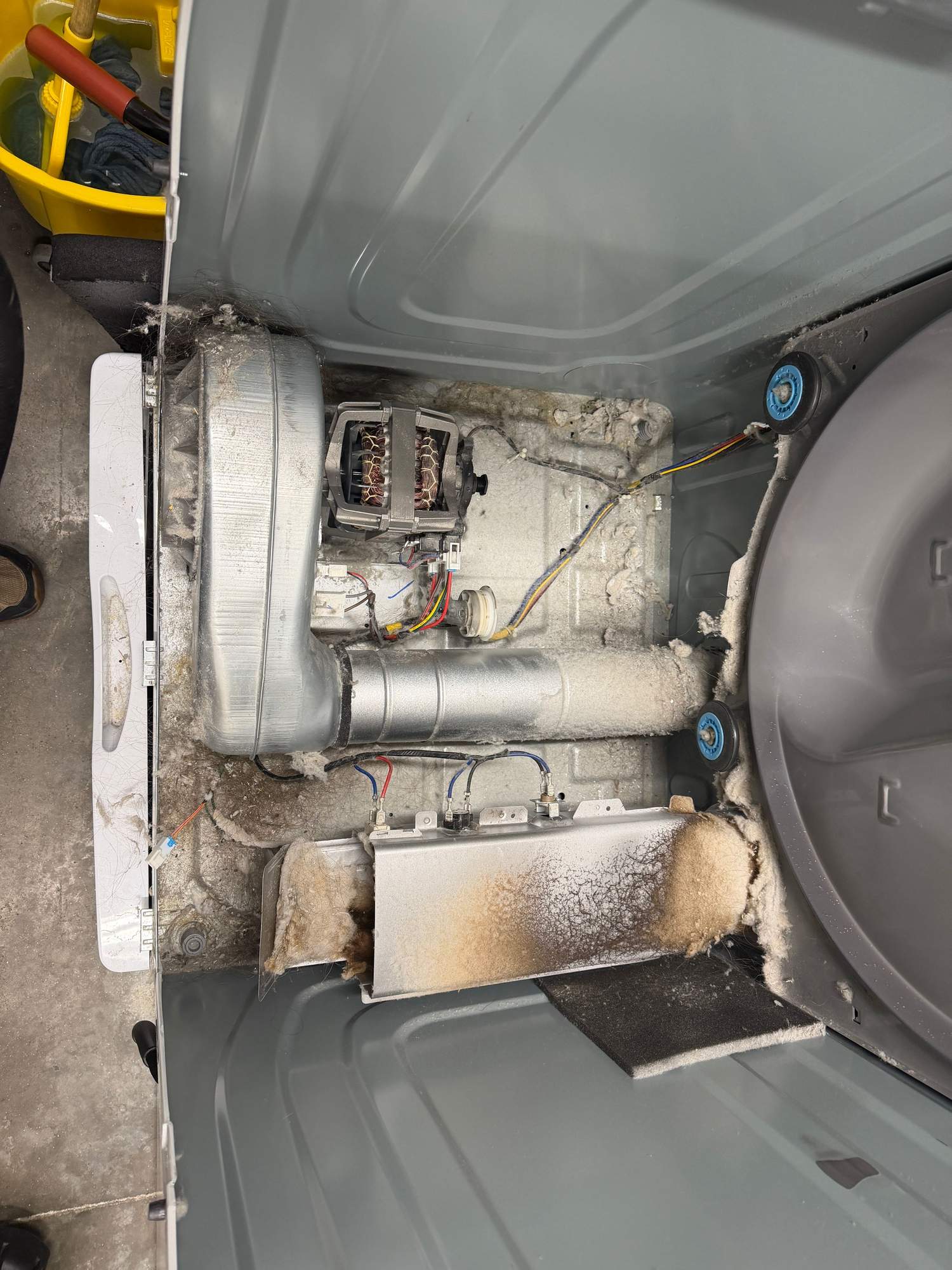
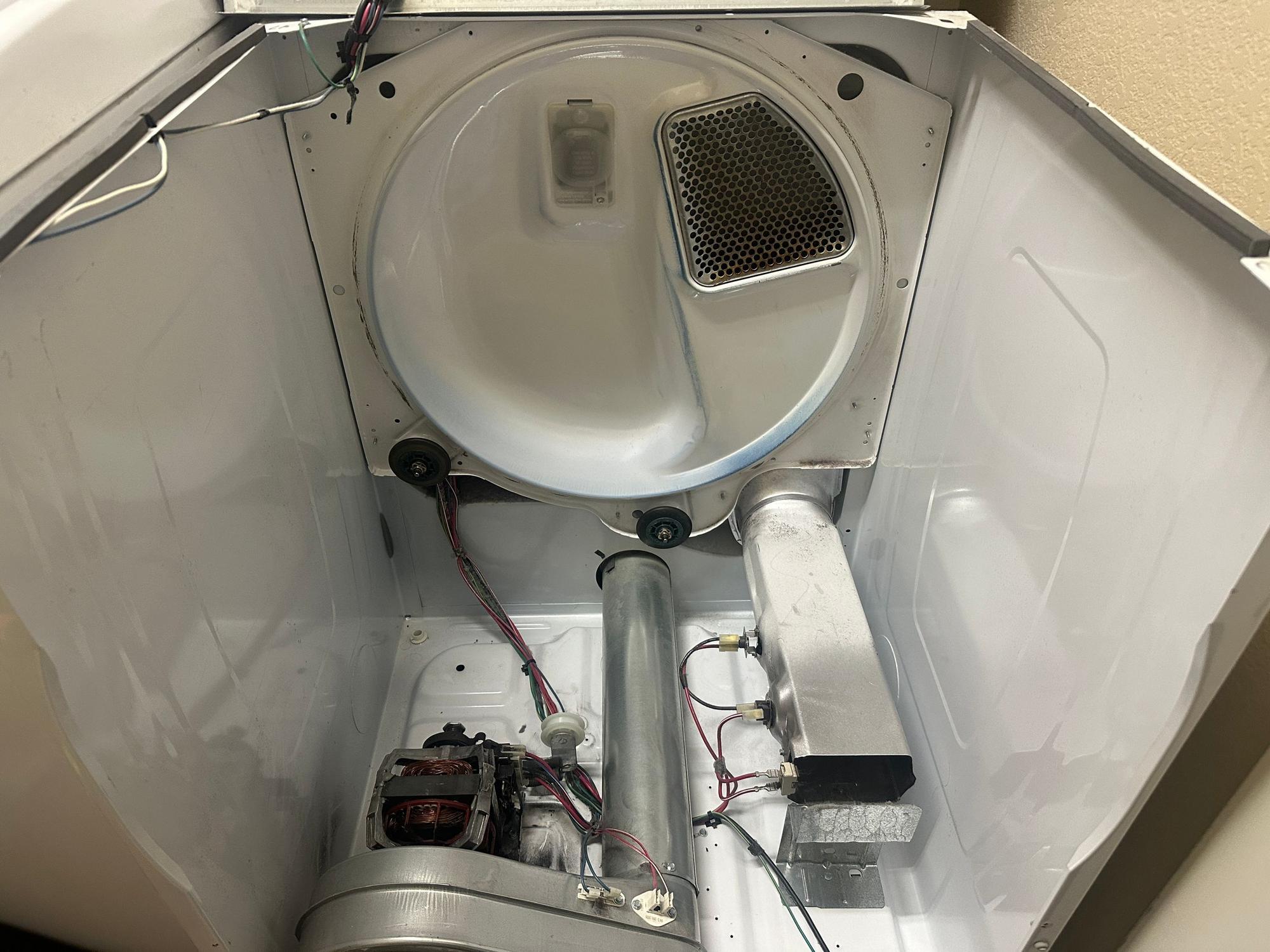
Between professional cleanings: check the exterior vent flap on the outside of your house and make sure it opens freely. In fall you'll start seeing wasps, debris, and dried leaves getting into that opening. Clear it out. Make sure the transition duct behind the dryer, the section connecting the dryer to the wall duct, is intact, fully connected, and not kinked or crushed.
Washer Hoses
Before freezing temperatures arrive, inspect your washer hoses. This is quick but important, especially if your laundry room is in a basement, garage, or any space that gets cold.
Rubber supply hoses are the failure point. Over time, they bulge, crack, and weaken near the fittings. A hose failure while the washer is running can put several gallons of water per minute onto your floor. Feel the length of each hose and squeeze near the fitting ends. Any softness, bubbling, or visible cracks means the hose should be replaced before winter. Better yet, replace rubber hoses with braided stainless steel. They're inexpensive, available at any hardware store, and dramatically less likely to fail.
Fall is also the time to make sure the water shutoff valves behind the washer actually work. Turn them off and back on to verify they're not seized up. If you ever need to stop water fast during a leak, you want to know that valve moves.
Refrigerator
Holiday season means more food in the fridge: bigger grocery runs, larger containers, more frequent door opening. The fridge needs to be in good shape for it.
Clean the condenser coils. They're either along the bottom front behind a grille or at the back of the unit. Dust them off with a vacuum or coil brush. This is the most effective single maintenance step you can do on a refrigerator.
Check the interior temperatures. The refrigerator compartment should be between 35 and 38 degrees. The freezer should be at 0. Use a simple thermometer and check. Many refrigerators run warmer than their settings suggest, especially older units or those with dirty coils.
Check both door gaskets. You'll be opening the fridge more during holiday cooking prep and cleanup. A gasket that barely holds cold in a low-traffic stretch of November will show its failures when the door is opening every few minutes for Thanksgiving dinner prep.
Dishwasher
The dishwasher is about to run more often than it has all year. Get ahead of any problems before they happen mid-holiday.
Pull and clean the filter. It's in the bottom of the tub, usually a cylindrical assembly that lifts or unscrews out. Rinse it under hot water and clear any debris. If it hasn't been cleaned recently, it's likely affecting wash performance already. You're just not noticing it because dishes look clean from the outside.
Run a cleaning cycle with white vinegar or a commercial dishwasher cleaner. This clears calcium deposits and residue from the pump and interior, which is especially relevant in Northern Colorado where moderately hard water accelerates mineral buildup.
Check the spray arms for clogged holes and the door gasket for mold or deterioration. A gasket that's starting to fail will leak, and you don't want to find that out when you're loading the dishwasher after a large holiday meal.
Garbage Disposal
Holiday cooking puts more through the disposal than it sees all year. It pays to know what it can and can't handle.
Do not put turkey grease or fat down the drain. It flows liquid while hot and solidifies in the pipes and trap as it cools, causing clogs that build up over multiple uses. Collect grease in a container and throw it in the trash.
Potato peels are another common holiday mistake. In any quantity, they turn into a dense paste inside the disposal that can jam or clog it. Same with celery. The long stringy fibers wrap around the disposal impeller and cause it to seize.
What the disposal can handle: small amounts of soft food scraps, with cold water running the entire time the disposal is on. Keep the water running for another 15 to 20 seconds after you turn off the disposal to flush the drain clear.
Run a cup of ice cubes through the disposal with cold water to knock loose any debris and give it a quick clean. Disposals use blunt impellers rather than blades, so the ice won't sharpen anything, but it does help clear buildup.
Work through this list in early October and you'll head into the holiday stretch without worrying about appliance failures during the worst possible timing. Most of these checks take 10 to 15 minutes. The dryer vent is the one that deserves professional attention if you haven't had it done.
I'm Jake with RMAS Appliance Repair in Fort Collins. If you find something during your fall checkup that needs more than basic cleaning, give me a call at (970) 443-4367. I serve customers throughout Northern Colorado and can usually get out quickly.
Need Professional Help?
If your appliance needs more than a DIY fix, I can help.
Related Articles
Your Spring Appliance Maintenance Checklist for Northern Colorado
Spring is a good time to do a quick walk-through of your appliances. Not because something is broken, but because a little attention now prevents a breakdown later when you actually need things working. Temperatures are climbing in Fort Collins, laundry piles up with spring cleaning, and appliances that coasted through winter are about to work harder. Here's what to check.
Why Is My Refrigerator Leaking Water? Causes and Fixes
You notice a puddle on the kitchen floor in front of the fridge. Or you open it up and find water pooling at the bottom of the fresh food section. A refrigerator leaking water is one of the most common calls I get here in Fort Collins. The good news is that several of the causes are things you can check and fix yourself. Some of them are not.
Appliance Repair in Fort Collins: Meet Jake at RMAS
If you're looking for appliance repair in Fort Collins, you should know what you're getting when you call RMAS.
Need appliance repair in Fort Collins?
Give me a call at (970) 443-4367 or fill out the contact form.