
Your Spring Appliance Maintenance Checklist for Northern Colorado

Spring is a good time to do a quick walk-through of your appliances. Not because something is broken, but because a little attention now prevents a breakdown later when you actually need things working. Temperatures are climbing in Fort Collins, laundry piles up with spring cleaning, and appliances that coasted through winter are about to work harder. Here's what to check.
Refrigerator
Your fridge never gets a day off, but spring puts extra demand on it. As outdoor temperatures rise, the unit has to work harder to stay cold. That's exactly when dirty condenser coils become a real problem.
Pull the fridge away from the wall or remove the front grille cover and look at the coils. After a winter of closed windows and recirculated air, they collect dust, pet hair, and debris. Vacuum them off. It takes five minutes and can noticeably reduce how hard the compressor runs.
While you're at it, check the door gaskets. Run your finger along the rubber seal on both the fridge and freezer doors and feel for gaps, cracks, or soft spots. Close the door on a dollar bill. If it pulls out without resistance, the seal isn't working and cold air is leaking out constantly. A worn gasket wastes energy and shortens the life of the compressor.
Also pull out the drip pan from underneath and clean it. A winter's worth of condensate sitting in there can grow mold and cause odors. Most people don't know the drip pan exists until they smell it.
Washer
Spring cleaning means more laundry. Before you run load after load, take a few minutes to check the machine itself.
Run an empty hot water cycle with two cups of white vinegar. Let it agitate, then let it sit for an hour before finishing the cycle. This breaks down soap residue, mildew, and the mineral buildup that accumulates over time, especially with the moderately hard water common in Northern Colorado. Once that cycle finishes, sprinkle half a cup of baking soda into the drum and run a second short hot cycle to deodorize. Use them in separate cycles. Mixing them together neutralizes both and you end up with neither one doing its job.
More importantly, check your supply hoses. The hot and cold water hoses running from the wall to the back of the machine take stress from vibration every single cycle. Winter freeze-and-thaw cycles in an unheated laundry room, or even temperature swings in a garage, can weaken the rubber. Look for bulges, cracks, or soft spots near the fittings. If a hose lets go, you're dealing with a significant water leak fast.
A hose that looks questionable should be replaced before it becomes an emergency. Braided stainless supply hoses are inexpensive and much more durable than rubber.
If your machine has a lint filter, clean it. Top-loaders often have one inside the drum. Check your manual if you're not sure where it is.
Dryer
Dryer vent cleaning is the most important item on this entire list. It is also the most neglected.
Lint that gets past the lint screen builds up inside the duct over time. A clogged vent restricts airflow, makes drying times longer, and concentrates heat in a duct lined with flammable material. This is a fire hazard, not just an efficiency issue.
If you can't remember the last time your vent was cleaned, it's been too long. If you have a large family or pets that shed, you should be cleaning it at least once a year. The lint screen catches a lot, but not everything, and it does nothing for the duct itself.
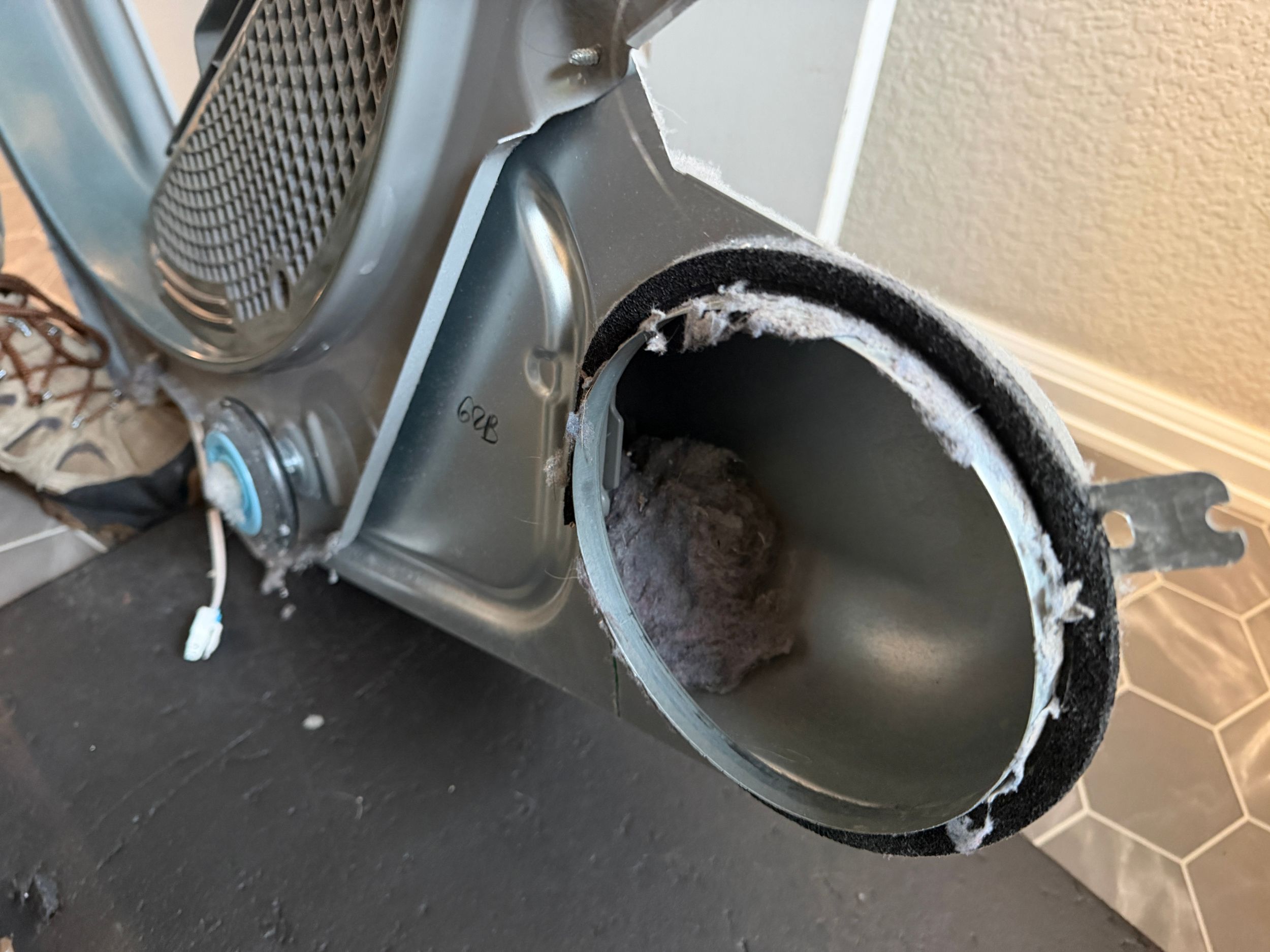
What you can do yourself: pull the dryer out and check the duct connection at the back. Make sure the duct is fully connected, not kinked, and not crushed behind the machine. Check that the exterior flap opens freely when the dryer runs. If it's stuck or barely moving, airflow is already restricted.
For the actual duct cleaning, call a technician. A short, straight run you might be able to handle with a brush kit from the hardware store. Longer runs or ducts with bends need professional equipment to clean thoroughly. RMAS handles dryer vent cleaning and can combine it with any dryer repairs you've been putting off.
Dishwasher
The dishwasher filter is something most people have never cleaned, even though it needs regular attention.
Pull out the bottom rack and look in the center of the floor of the tub. There's a cylindrical filter assembly that unscrews or lifts out. Remove it and rinse it under hot running water. Use a soft brush if needed. A clogged filter means the machine is recirculating dirty water over your dishes.
While the filter is out, check the spray arms. Each arm has small holes that water shoots through to clean your dishes. Those holes clog with mineral deposits and food debris. Use a toothpick to clear any that are blocked. Run water through the arms to confirm flow is unobstructed.
Check the door gasket for mold or buildup. Wipe it down with a damp cloth and inspect the rubber for cracks or spots where it's pulling away from the door. A failing gasket leads to leaks.
Run a cleaning cycle. You can use a commercial dishwasher cleaner or just place a cup of white vinegar on the top rack and run a hot cycle without any dishes. It clears out the residue from months of use.
Oven and Range
Winter tends to mean more cooking. More roasts, more casseroles, more holiday meals. By spring, most ovens could use a serious cleaning before you get into outdoor cooking season and use the oven less frequently.
Run the self-clean cycle if your oven has one, or clean manually if you prefer not to deal with the heat and smell. Pay attention to the oven bottom and door gasket, where grease accumulates.
For gas ranges, check the burner igniters. If a burner clicks several times before lighting, the igniter is getting wet or dirty. Remove the burner cap and clean around the igniter with a dry toothbrush. If it continues to spark repeatedly after the burner is lit, the igniter may need to be replaced.
Test your oven temperature with an inexpensive oven thermometer. Set the oven to 350 degrees and check what the thermometer reads after 20 minutes. If it's off by more than 25 degrees consistently, the temperature sensor or thermostat may need calibration. Baking at the wrong temperature produces inconsistent results and you may not realize the oven is the reason.
None of this takes a full weekend. Most of it is 10 to 15 minutes per appliance. The goal is to catch small problems before they become expensive ones, and to keep your appliances running efficiently through the months ahead.
I'm Jake with RMAS Appliance Repair in Fort Collins. If you work through this list and find something that needs more than basic maintenance, give me a call at (970) 443-4367. I serve customers throughout Northern Colorado and can usually get out to you quickly.
Need Professional Help?
If your appliance needs more than a DIY fix, I can help.
Related Articles
Why Is My Refrigerator Leaking Water? Causes and Fixes
You notice a puddle on the kitchen floor in front of the fridge. Or you open it up and find water pooling at the bottom of the fresh food section. A refrigerator leaking water is one of the most common calls I get here in Fort Collins. The good news is that several of the causes are things you can check and fix yourself. Some of them are not.
Appliance Repair in Fort Collins: Meet Jake at RMAS
If you're looking for appliance repair in Fort Collins, you should know what you're getting when you call RMAS.
6 Signs Your Oven or Stove Needs Repair
If you've been Googling "oven not heating" or wondering whether your stove is worth fixing, you're in the right place. Ovens and stoves are reliable appliances, but they do fail, and the symptoms usually show up gradually before things stop working entirely. Here are six signs I see regularly in Fort Collins homes that tell me something needs attention.
Need appliance repair in Fort Collins?
Give me a call at (970) 443-4367 or fill out the contact form.