
6 Signs Your Oven or Stove Needs Repair

If you've been Googling "oven not heating" or wondering whether your stove is worth fixing, you're in the right place. Ovens and stoves are reliable appliances, but they do fail, and the symptoms usually show up gradually before things stop working entirely. Here are six signs I see regularly in Fort Collins homes that tell me something needs attention.
1. Your Oven Isn't Reaching Temperature
This one is easy to miss because food still cooks, just slower or unevenly. You set the oven to 375 and it takes an hour to do what used to take 45 minutes. Or one side of the pan browns and the other stays pale.
Do a simple test before calling anyone. Put an oven thermometer inside and set the oven to a specific temperature. Give it 20 minutes to stabilize, then compare what the thermometer reads to what you set it to. A 25-degree difference is within normal range. More than that, and something is off.
The likely culprits are a failing bake element (the heating element at the bottom), a bad temperature sensor, or a thermostat that needs calibration. A bake element that has failed often shows visible damage: blistering, cracking, or a dark spot where it burned through. If you can see it, you can usually confirm it without any tools.
2. Gas Burners Won't Ignite
You turn the knob, you hear clicking but no flame. Or there's no clicking at all. Both are fixable, but they have different causes.
Clicking without a flame is usually a dirty igniter. Food debris and grease can coat the ceramic igniter tip and prevent a good spark. Try cleaning it with a dry toothbrush, but be gentle, those igniter tips are fragile. Clear out any debris around the burner cap too, then test it again. That fixes the problem more often than you'd expect.
No clicking at all usually means a failed igniter or a wiring issue to the spark module. That's a job for a technician.
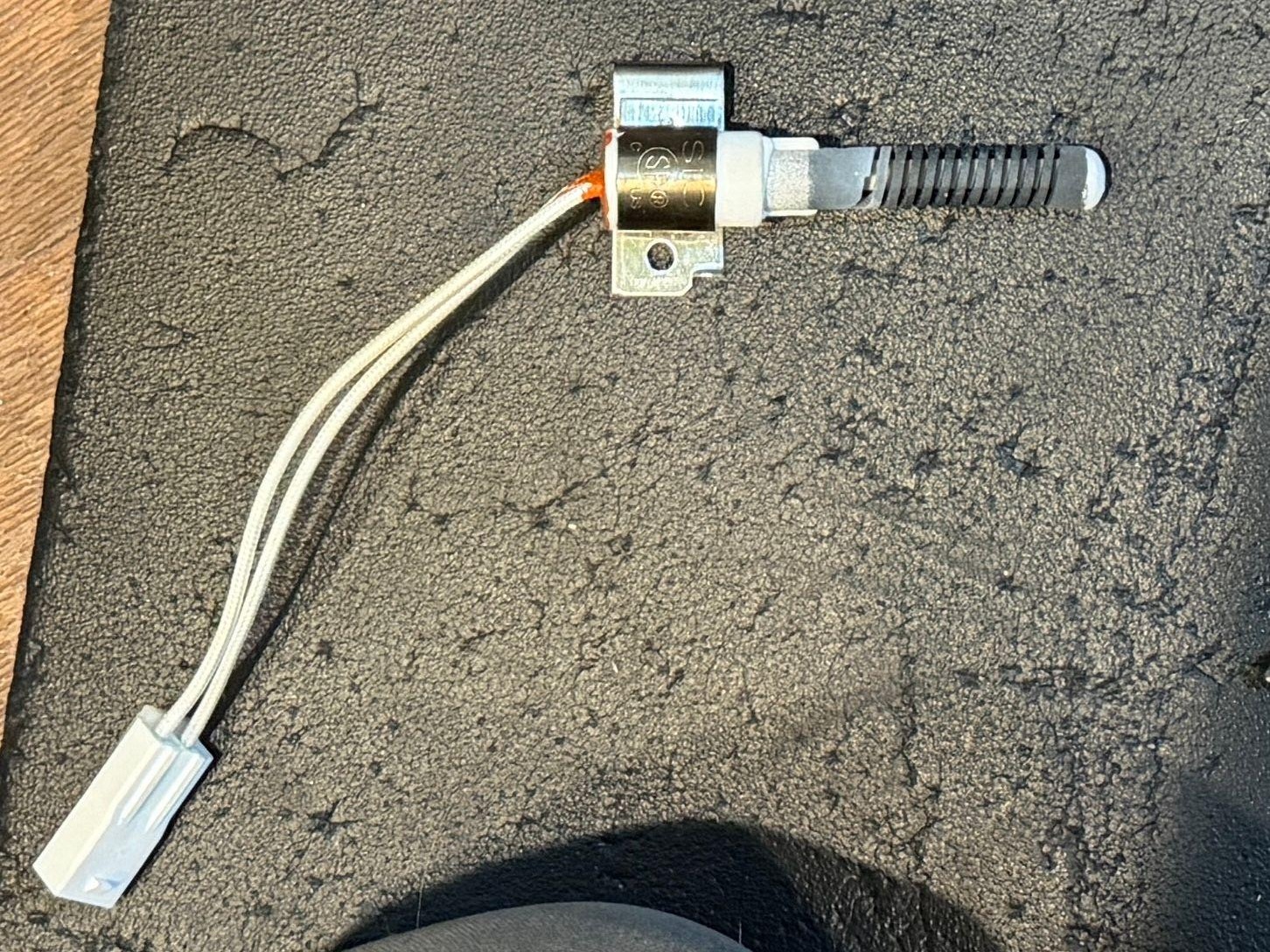
If you smell gas but the burner won't light, or if you suspect a gas valve issue, stop there. Do not try to diagnose a gas valve yourself. Turn off the gas, ventilate the area, and call a technician. Gas valve problems need a pro.
3. Electric Burners Aren't Heating
Electric coil burners are actually one of the easier things to troubleshoot at home. If a burner isn't heating, start by swapping it with one that works. Unplug one from its receptacle and plug in the known-good burner. If the problem follows the element, you need a new element. If the problem stays at the same location, the issue is the receptacle or the switch, not the element itself.
Look at the element closely before swapping anything. A burned-out coil element often shows visible blistering, pitting, or a break in the coil. If you see that, it needs to be replaced.
Replacement coil elements are usually inexpensive and easy to find for common models. The receptacle and switch are also replaceable, but they require opening up the cooktop and working around wiring. That's a point where most people call for help.
4. The Oven Door Isn't Closing Properly
A door that doesn't seal tight is a bigger problem than it seems. Heat escaping through a gap means uneven cooking, longer preheat times, and wasted energy. Your oven essentially can't do its job.
The door has hinges, a spring mechanism, and a rubber or fiberglass gasket around the perimeter. Any of those can fail. Worn hinges let the door sag. A broken spring means the door won't stay closed with consistent pressure. A cracked or torn gasket lets heat leak out even when the door looks closed.
You can inspect the gasket yourself. Run your hand along the perimeter and look for tears, stiff spots, or sections that have pulled away from the door frame. If the gasket is the problem, it's usually a straightforward replacement. Hinges and springs are more involved. If the door feels loose, droopy, or doesn't spring back firmly when you let go, have someone look at the hinge assembly.
5. Strange Smells When You Use It
A mild smell the first time you use a new oven, or when cooking something new, is normal. A burning smell that has nothing to do with the food is not.
A persistent burning smell from an electric oven often means an element is failing or a wiring connection is overheating. You might also notice smoke or discoloration near a specific element. Turn off the oven and don't use it until it's been checked. Wiring issues are a fire risk.
Gas smell is a different situation entirely. If you smell gas while the burners are off, or after you turn them on and off, take it seriously. Turn off the gas supply, open windows, leave the house, and call your gas company before you call me. I can repair the appliance once it's been cleared, but a gas leak is not something to troubleshoot yourself.
6. The Self-Clean Cycle Broke Something
This is one of the most common things I see in Fort Collins. The self-clean cycle runs at extremely high temperatures, somewhere around 900 degrees Fahrenheit, and that heat puts serious stress on every component inside the oven. The door latches, the thermal fuse, the control board, and the door hinges all take a beating.
It's not unusual for an oven to work fine right up until the self-clean cycle, and then stop working partway through or immediately after. The door may lock and refuse to unlock. The oven may stop heating entirely. The display may go dark.
Often it's a blown thermal fuse. Sometimes it's a failed door latch motor. In worse cases, the control board gets fried. The good news is these components are replaceable in most ovens. The bad news is a self-clean failure sometimes means multiple parts need to be diagnosed before the root cause is clear.
If your oven gave up during or after a self-clean, resist the urge to run it again or force the door open. Call a technician first.
Oven and stove repair in Fort Collins is most of what I do. I can usually diagnose these problems quickly, and I'll tell you straight whether a repair makes sense or whether you're better off replacing the unit. No guessing, no upselling parts you don't need.
I'm Jake with RMAS Appliance Repair in Fort Collins. Give me a call at (970) 443-4367 and we'll figure out what's going on.
Need Professional Help?
If your appliance needs more than a DIY fix, I can help.
Related Articles
Your Spring Appliance Maintenance Checklist for Northern Colorado
Spring is a good time to do a quick walk-through of your appliances. Not because something is broken, but because a little attention now prevents a breakdown later when you actually need things working. Temperatures are climbing in Fort Collins, laundry piles up with spring cleaning, and appliances that coasted through winter are about to work harder. Here's what to check.
Why Is My Refrigerator Leaking Water? Causes and Fixes
You notice a puddle on the kitchen floor in front of the fridge. Or you open it up and find water pooling at the bottom of the fresh food section. A refrigerator leaking water is one of the most common calls I get here in Fort Collins. The good news is that several of the causes are things you can check and fix yourself. Some of them are not.
Appliance Repair in Fort Collins: Meet Jake at RMAS
If you're looking for appliance repair in Fort Collins, you should know what you're getting when you call RMAS.
Need appliance repair in Fort Collins?
Give me a call at (970) 443-4367 or fill out the contact form.