
Summer Appliance Maintenance Tips for Northern Colorado
Summer in Northern Colorado is no joke. Fort Collins can push into the mid-to-upper 90s during July and August, and that heat doesn't just affect your comfort. It changes how hard every appliance in your house has to work. A refrigerator that ran fine all winter will start straining when the ambient temperature in your kitchen climbs above 80 degrees. A dryer vent that was passable in spring becomes a fire hazard when heat accumulates in a laundry room. Here's what to check before summer hits full force.
Refrigerator Works Harder in Heat
This is the appliance that deserves the most attention in summer. Your fridge is designed to maintain a 37-to-40 degree interior regardless of what's happening outside, but that takes more energy, and more strain on the compressor, as ambient temperatures rise. In a hot kitchen, the compressor runs nearly continuously.
The single biggest thing you can do is clean the condenser coils. They're either behind the fridge along the bottom or underneath behind a grille. Dust, pet hair, and kitchen debris collect there and insulate the coils, which are supposed to be releasing heat. A layer of buildup forces the compressor to work harder and run longer to do the same job. Pull the fridge out, vacuum the coils, and push it back. That's it.
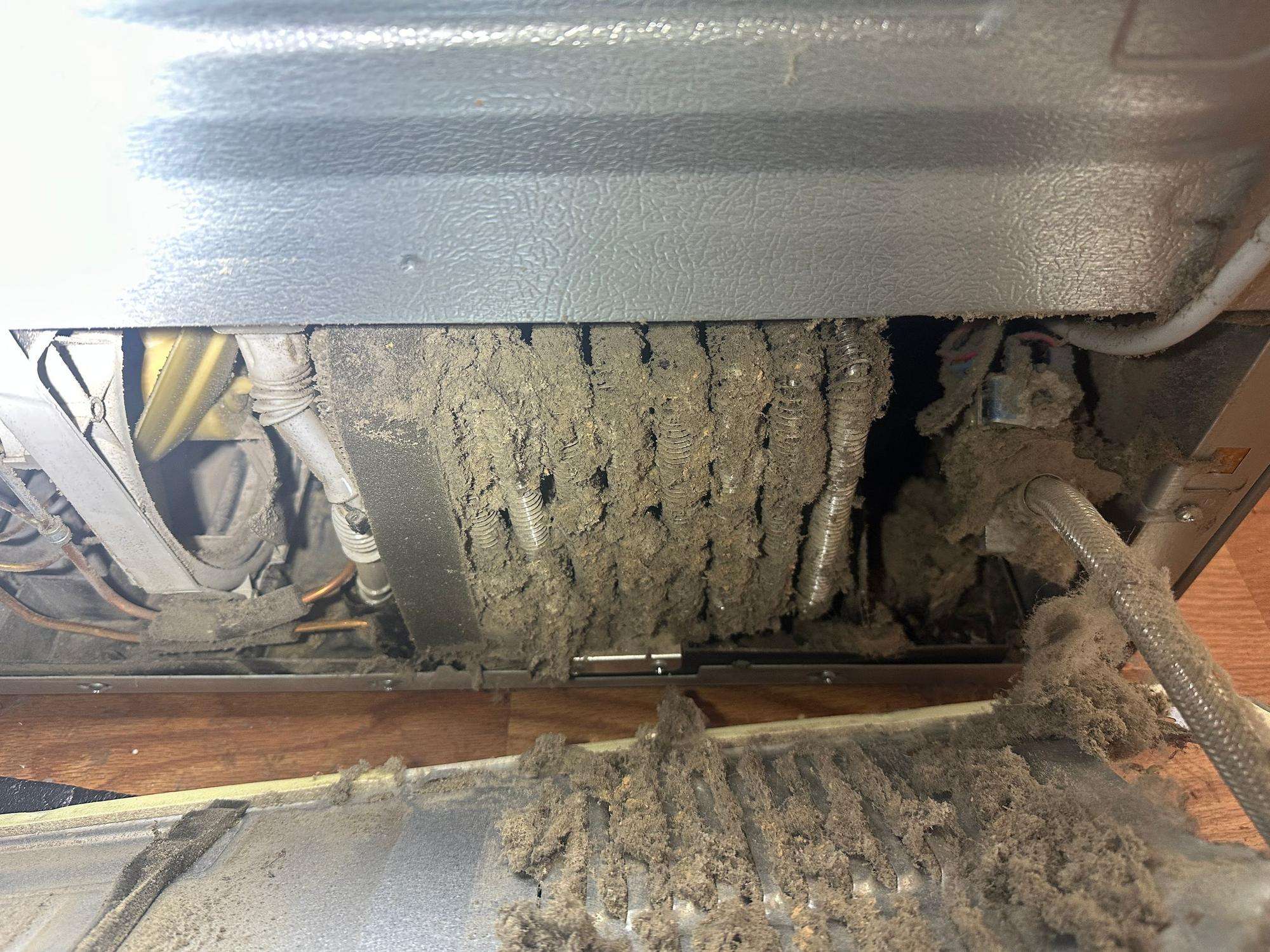
While you're looking at the fridge, check the door gaskets on both the refrigerator and freezer compartments. Press the door closed on a dollar bill at several points around the seal. If the bill slides out without resistance, the gasket isn't sealing properly and you're losing cold air constantly. In summer, a failing gasket that was borderline in winter will start causing real problems.
Two more summer-specific habits: don't overfill the refrigerator. Cold air needs to circulate inside the cabinet. A packed fridge can't move air effectively, which means inconsistent temperatures and overworked components. And let hot food cool on the counter before you put it in. Putting a hot dish directly into the fridge makes the compressor work to pull that heat out, which adds up.
Dishwasher Efficiency in Summer
Your dishwasher generates heat and steam every cycle. In winter that's a minor bonus. In summer, running the dishwasher at 6 p.m. adds to an already warm kitchen. This is a small thing, but running full loads during the cooler parts of the day, early morning or late at night, makes a noticeable difference in how warm your house gets.
More importantly, summer is when mineral buildup tends to show up as a bigger problem. Northern Colorado water is moderately hard. Minerals accumulate inside the spray arms, on the heating element, and in the filter, and the issue compounds over time. Clean the filter at the bottom of the tub. It's the cylindrical assembly that unscrews or lifts out in the center of the tub floor. Rinse it under running water and use a soft brush to clear any debris.
Check the spray arm holes while you're in there. Those small jets clog with calcium deposits. Use a toothpick to clear any that are blocked. If water can't spray evenly, dishes don't get clean and the machine compensates by running longer cycles and using more water. Run a cleaning cycle with white vinegar or a commercial dishwasher cleaner once a month through the summer.
Dryer Venting in Summer
Lint is always a fire hazard. In summer it gets worse, because the air temperature inside a laundry room or utility closet can climb significantly, and there's less temperature contrast pushing airflow through the vent to the outside. A partially blocked vent that manages in cooler months can reach dangerous heat levels in July.
Check the exterior vent flap on the outside of your house. It should open freely when the dryer runs and close when it stops. If it's stiff, bent, or barely moving, airflow is restricted. Bird nests and wasp nests are a real problem in that exterior vent opening from spring onward in Northern Colorado, so check that it's clear.
Shorter drying cycles in summer heat can also reduce the load on the machine. If you're drying lighter summer clothing, reduce the cycle time accordingly rather than running full heavy-duty cycles out of habit. The dryer doesn't need to run as long, and the duct stays cooler.
If you can't remember when you last had the vent cleaned or you're seeing longer drying times than usual, get it cleaned before the summer heat peaks. Don't wait until fall.
Freezer and Ice Maker Demand
Summer puts a different kind of demand on your freezer: more ice, more frozen items going in and out, and the door opening more frequently. Keep your freezer set at 0°F. If it's been creeping up to 10 or 15 degrees because the thermostat isn't dialed in, that matters more in summer when you're relying on it heavily.
Don't block the interior vents inside the freezer compartment. Stacking items directly against the walls or in front of vent openings restricts cold air circulation and creates warm spots. The freezer will run longer and the ice maker will struggle to keep up.
For ice makers: if yours is producing smaller cubes than usual, slow output, or ice with an off taste, those are signs it needs attention. Smaller cubes usually mean a water flow issue or a failing water inlet valve. Slow output in heat can indicate a temperature problem or a clog in the line. An ice maker that's been ignored for a few years often has mineral buildup in the lines, which is especially common with Northern Colorado's moderately hard water.
General Energy Tips
Colorado summer storms can be intense and fast-moving. A storm that rolls in off the Rockies in 20 minutes can spike voltage when power fluctuates. Refrigerators, washers, dryers, and dishwashers don't need to be on surge protectors as urgently as your TV or computer, but the control boards and electronics in modern appliances are vulnerable to voltage spikes. A surge protector on the outlet side of major appliances is cheap insurance.
Also think about when you run appliances. Utility rates in Northern Colorado can vary with peak demand, and peak demand is in the afternoon during summer heat. Running the dishwasher and washer in the early morning or after 9 p.m. rather than mid-afternoon is a practical way to reduce your bill.
None of this takes long. Cleaning the fridge coils and the dishwasher filter is a 20-minute job. Checking the dryer vent flap takes two minutes. Small maintenance steps like these keep appliances running through the season without calling anyone.
I'm Jake with RMAS Appliance Repair in Fort Collins. If something you find during summer maintenance turns out to need more than basic cleaning, give me a call at (970) 443-4367. I work throughout Northern Colorado and can usually get out to you quickly.
Need Professional Help?
If your appliance needs more than a DIY fix, I can help.
Related Articles
Your Spring Appliance Maintenance Checklist for Northern Colorado
Spring is a good time to do a quick walk-through of your appliances. Not because something is broken, but because a little attention now prevents a breakdown later when you actually need things working. Temperatures are climbing in Fort Collins, laundry piles up with spring cleaning, and appliances that coasted through winter are about to work harder. Here's what to check.
Why Is My Refrigerator Leaking Water? Causes and Fixes
You notice a puddle on the kitchen floor in front of the fridge. Or you open it up and find water pooling at the bottom of the fresh food section. A refrigerator leaking water is one of the most common calls I get here in Fort Collins. The good news is that several of the causes are things you can check and fix yourself. Some of them are not.
Appliance Repair in Fort Collins: Meet Jake at RMAS
If you're looking for appliance repair in Fort Collins, you should know what you're getting when you call RMAS.
Need appliance repair in Fort Collins?
Give me a call at (970) 443-4367 or fill out the contact form.