
Wall Oven Not Heating? Common Causes and What to Do
You set the temperature, wait for the preheat beep, and the oven never actually gets hot. Or it heats, but unevenly, with one side of the pan burning while the other stays pale. Wall ovens have a handful of components that commonly fail, and most of them point to specific symptoms that make diagnosis pretty straightforward.
Here's what to look for.
Bake or Broil Element Burned Out
This is the most common cause of a wall oven that won't heat. Electric wall ovens use a bake element at the bottom of the cavity and a broil element at the top. When one fails, you lose that heat source entirely.
The good news is you can usually see the problem. Open the oven and look at the elements carefully. A burned-out element often shows visible damage: a blister in the metal, a crack, or a clean break in the coil. Sometimes there's a dark spot or scorch mark where it failed. If the bake element is out, the oven won't reach temperature at all. If the broil element is out, broil mode won't work and even bake mode may take much longer than normal since most ovens use both elements during preheating.
Element replacement is one of the more straightforward oven repairs. The elements typically clip in or fasten with two screws and connect to a wiring harness at the back. Match the part number to your model, disconnect the old element, and install the new one. If you're comfortable with basic appliance work, this is a doable DIY repair.
Faulty Temperature Sensor
If the oven heats but the temperature is way off, overshooting, undershooting, or wildly inconsistent, the temperature sensor is a likely culprit.
The sensor is a thin probe, usually located at the back upper corner of the oven cavity. It reads the internal temperature and communicates with the control board to cycle the heating elements on and off. When the sensor fails, the oven has no accurate reference point for temperature.
You can test it with a multimeter. At room temperature, a properly functioning oven temperature sensor typically reads around 1100 ohms of resistance. Pull the oven out slightly if you can, disconnect the sensor leads, and test across the terminals. If you're reading something wildly different, or no continuity at all, the sensor is the problem.
Sensors are relatively inexpensive parts and straightforward to replace. This is a good repair to make before assuming the control board is bad.
Control Board Failure
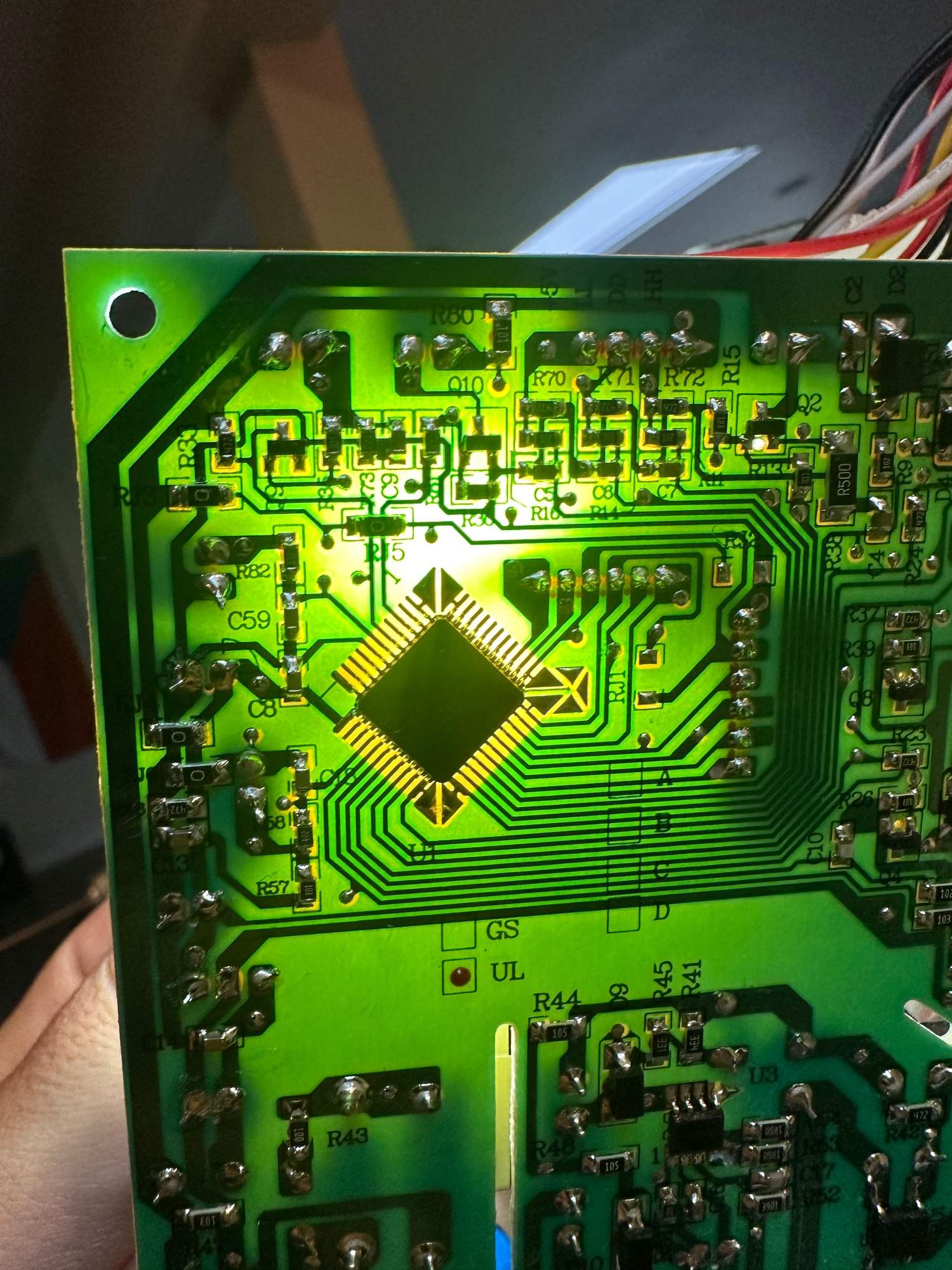
The control board is the brain of the operation. It processes your temperature input, controls the relays that send power to the elements, and manages the display and timer functions. When it fails, things get strange in a hurry.
Signs of a bad control board include a digital display that's blank, showing error codes, or behaving erratically. Buttons that don't respond consistently. The oven that won't heat even though elements and the sensor test fine. Sometimes one function works and another doesn't. Bake works but broil doesn't, or the timer runs but the oven won't heat.
One thing worth knowing: control boards commonly fail after self-clean cycles. The self-clean cycle runs the oven up to around 900 degrees Fahrenheit for several hours. That extreme heat stresses every component in the oven, and the control board sits just outside the cavity where it absorbs a lot of residual heat. I see this connection often enough that I always ask about recent self-clean use when diagnosing a wall oven that stopped working suddenly.
Control boards can be expensive parts. Before ordering one, make sure everything else has been ruled out. A bad board diagnosis should be confirmed, not assumed.
Igniter Problems (Gas Wall Ovens)
Gas wall ovens don't use heating elements. They use a burner ignited by a glow igniter. The igniter does two jobs: it glows hot enough to light the gas, and the electrical current it draws opens the gas valve. This is important because the gas valve won't open until the igniter reaches a minimum current draw. A weak igniter won't pull enough current, so the valve stays closed and no gas flows.
If you smell gas at any point during this process, stop immediately. Shut off the gas supply at the shutoff valve, ventilate the area, and call your gas utility before doing anything else.
You can observe the igniter through the broil drawer or by removing the bottom panel inside the oven cavity. When you turn the oven on, the igniter should glow bright orange within about 30 to 60 seconds and then the burner should light. If the igniter glows but the burner never ignites, the igniter is too weak to open the valve even though it still produces some heat. It needs to be replaced.
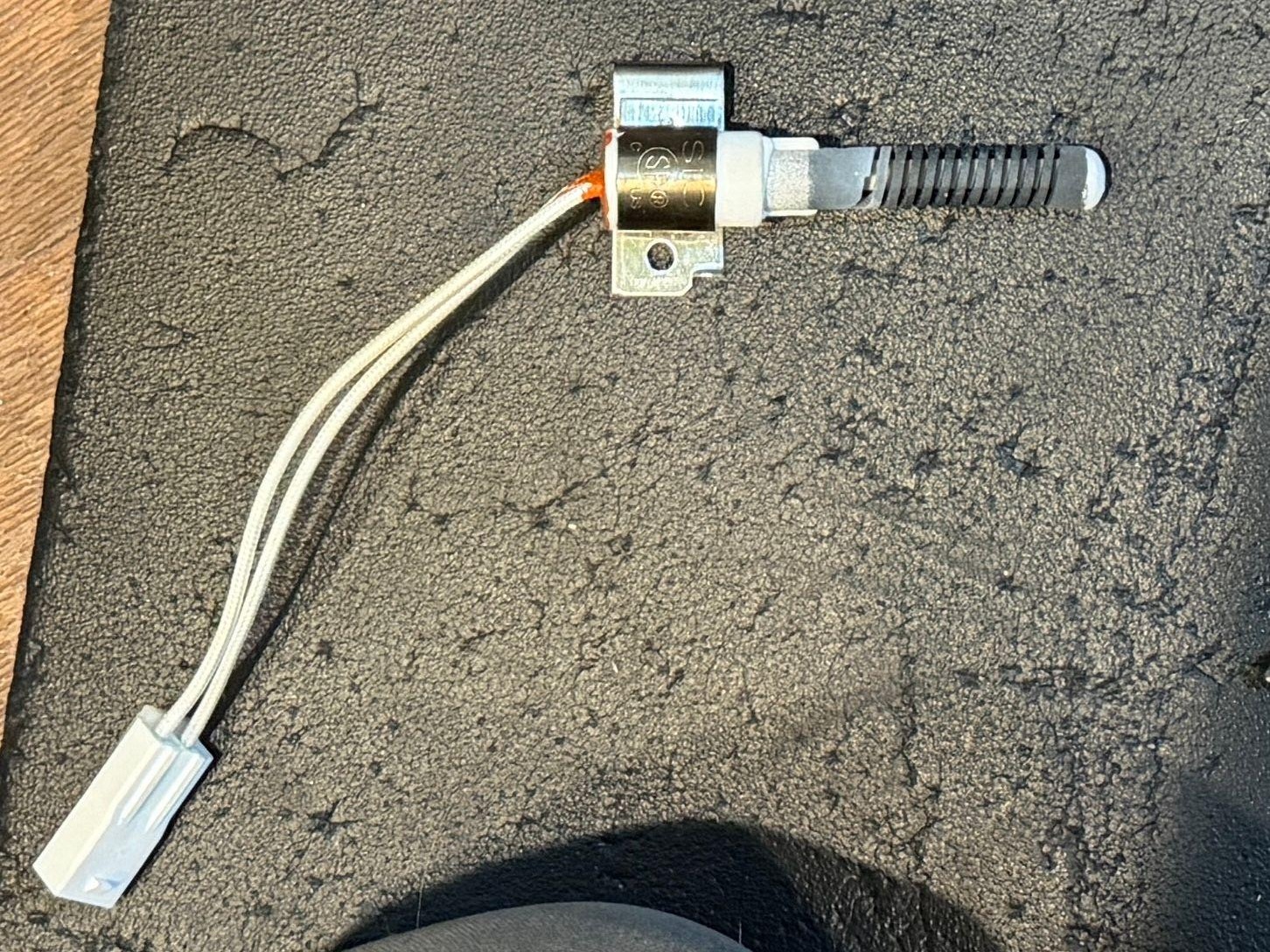
Igniter replacement is a common repair, but on a gas appliance it should be done by a qualified technician. The part is usually accessible once the oven bottom panel is removed, and it's worth doing before the oven fails completely since a weak igniter often gets progressively worse.
Door Latch and Lock Issues
Wall ovens with a self-clean function have a door latch mechanism that locks the door during the self-clean cycle. After the cycle completes and the oven cools down, the latch is supposed to release. Sometimes it doesn't.
A door that's stuck in the locked position after a self-clean is a common failure. The latch motor or the mechanism itself can jam, leaving you with a door you can't open and an oven that may refuse to operate. Some ovens also won't heat at all if the control system thinks the door is locked, even if the latch is stuck in the locked position.
If this happens, let the oven cool completely before trying anything. On some models you can manually move the latch arm to the unlocked position. Check your owner's manual for the procedure specific to your model. If the latch motor has failed mechanically, it usually needs to be replaced. This repair is more involved on a wall oven than on a range, but it's a standard fix.
Why Wall Ovens Are Different from Ranges
Here's something people don't always account for when they're thinking about wall oven repair: access is harder.
A freestanding range sits on the floor and rolls out. You can tilt it, access it from multiple sides, and maneuver it without much trouble. A wall oven is built into the cabinetry. To get at most components, you have to pull the unit out of the cabinet opening, which means dealing with the electrical connection, the weight of the unit (these things are heavier than they look), and the tight clearances of whatever cabinet it's installed in.
Some repairs that take thirty minutes on a range take two hours on a wall oven just because of the access problem. That's not a reason to skip the repair, but it does factor into the labor estimate.
I handle wall oven installs and repairs throughout Fort Collins and Northern Colorado. If your oven is in a tight spot or a custom cabinet and you're not sure how to get it out safely, that's exactly the kind of job I'm set up to handle.
I'm Jake with RMAS Appliance Repair in Fort Collins. Wall ovens are something I work on regularly, and I'm familiar with most of the major brands you'll find in this area.
If your wall oven isn't heating and you've worked through the basics, give me a call at (970) 443-4367. I can usually diagnose the problem in one visit and give you a straight answer on whether repair or replacement makes more sense.
Need Professional Help?
If your appliance needs more than a DIY fix, I can help.
Related Articles
Your Spring Appliance Maintenance Checklist for Northern Colorado
Spring is a good time to do a quick walk-through of your appliances. Not because something is broken, but because a little attention now prevents a breakdown later when you actually need things working. Temperatures are climbing in Fort Collins, laundry piles up with spring cleaning, and appliances that coasted through winter are about to work harder. Here's what to check.
Why Is My Refrigerator Leaking Water? Causes and Fixes
You notice a puddle on the kitchen floor in front of the fridge. Or you open it up and find water pooling at the bottom of the fresh food section. A refrigerator leaking water is one of the most common calls I get here in Fort Collins. The good news is that several of the causes are things you can check and fix yourself. Some of them are not.
Appliance Repair in Fort Collins: Meet Jake at RMAS
If you're looking for appliance repair in Fort Collins, you should know what you're getting when you call RMAS.
Need appliance repair in Fort Collins?
Give me a call at (970) 443-4367 or fill out the contact form.