
Why Is My Washer Shaking? Common Causes and Fixes
A washing machine that shakes the whole room is hard to ignore. It's loud, it's alarming, and it can walk itself right off the laundry room floor if the problem gets bad enough. The good news is that shaking and vibrating are common complaints, and a lot of the time the fix is simple.
Here's how to figure out what's causing it.
Unbalanced Load
This is the most common reason a washer shakes during the spin cycle. Heavy items like towels, jeans, or blankets tend to clump on one side of the drum. When the machine spins up, all that weight is off-center and the whole machine rocks.
The fix is easy. Open the lid or door, redistribute the items, and restart the cycle. If you're washing a single heavy item like a comforter, throw in a few towels to balance the load.
Top-loaders are more prone to this than front-loaders, but it happens with both.
Leveling Feet
Every washing machine has four adjustable feet at the bottom. If the machine isn't sitting level, it will rock and vibrate on every spin cycle. This is especially common if the machine has been moved recently or if it's sitting on an uneven floor.
Get down and check whether all four feet are touching the floor solidly. Rock the machine front to back and side to side. If it moves, one or more feet need adjusting.
You can adjust the feet yourself. Most unscrew or thread down by hand. Use a level if you have one, or just make sure the machine doesn't rock. Tighten the lock nuts against the base once everything is stable. This takes ten minutes and doesn't require any special tools.
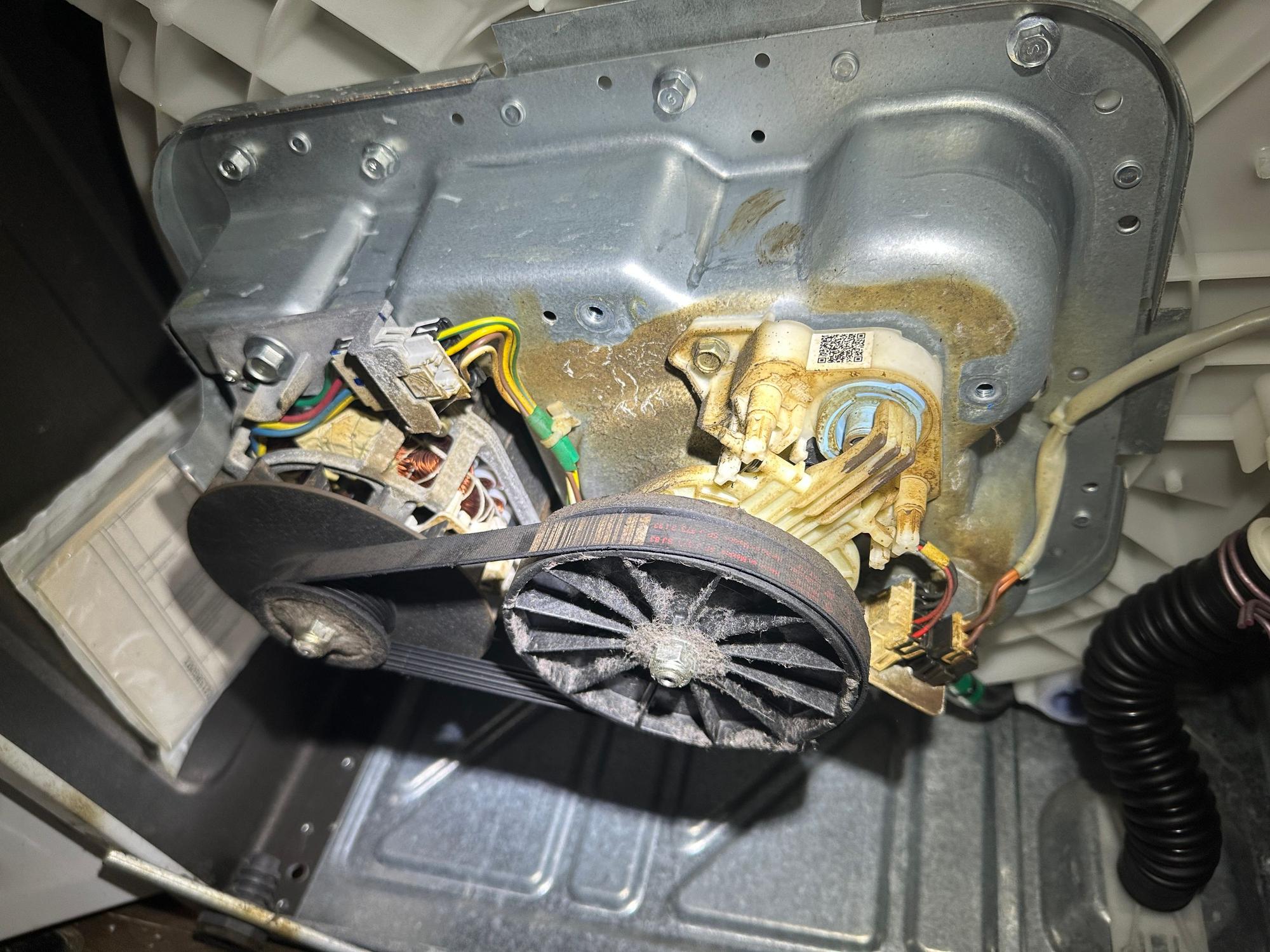
Worn Shock Absorbers or Suspension Springs
If your load is balanced and the machine is level but it still shakes badly, the internal suspension system may be worn out. Front-loaders use shock absorbers. Top-loaders typically use suspension springs or damping straps.
These components absorb the movement of the drum during the spin cycle. When they wear out, the drum has nothing to cushion it and you get violent shaking, often with a loud banging sound.
This is not a complicated fix mechanically, but it does require opening up the machine and identifying which parts need replacing. If you're comfortable with appliance repairs and can find the right parts for your model, it's doable. If not, this is a good time to call someone.
Damaged Drum Bearings
This one is more serious. Drum bearings support the inner drum and allow it to spin smoothly. When they wear out, you'll hear a grinding or rumbling sound during the spin cycle, usually getting louder over time. The machine may also shake more than usual.
A quick check: open the washer, grab the drum, and try to move it up and down. Some play is normal, but excessive movement or a rough, gritty feeling when you spin it by hand points to worn bearings.
Replacing drum bearings is a significant repair. It involves disassembling most of the machine and pressing out the old bearings. On some machines, the bearings and tub are sold as one assembly, which makes the part cost high. It's worth getting a repair estimate to weigh against the cost of replacing the machine.
When to Call a Technician
Here's a simple rule. If adjusting the load and leveling the feet don't fix the shaking, you're looking at internal components and it's time to bring someone in.
Suspension parts are affordable to replace. Bearings can go either way depending on the machine. Either way, a proper diagnosis will tell you whether repair makes financial sense before you spend money on parts.
I'm Jake with RMAS Appliance Repair in Fort Collins. I work on washers throughout Northern Colorado, including Loveland, Windsor, and Greeley. If your machine is shaking and you're not sure why, give me a call at (970) 443-4367.
A shaking washer usually has a straightforward cause. Let's figure it out before it damages your floors or the machine itself.
Need Professional Help?
If your appliance needs more than a DIY fix, I can help.
Related Articles
Your Spring Appliance Maintenance Checklist for Northern Colorado
Spring is a good time to do a quick walk-through of your appliances. Not because something is broken, but because a little attention now prevents a breakdown later when you actually need things working. Temperatures are climbing in Fort Collins, laundry piles up with spring cleaning, and appliances that coasted through winter are about to work harder. Here's what to check.
Why Is My Refrigerator Leaking Water? Causes and Fixes
You notice a puddle on the kitchen floor in front of the fridge. Or you open it up and find water pooling at the bottom of the fresh food section. A refrigerator leaking water is one of the most common calls I get here in Fort Collins. The good news is that several of the causes are things you can check and fix yourself. Some of them are not.
Appliance Repair in Fort Collins: Meet Jake at RMAS
If you're looking for appliance repair in Fort Collins, you should know what you're getting when you call RMAS.
Need appliance repair in Fort Collins?
Give me a call at (970) 443-4367 or fill out the contact form.